


 +353 24 904 96


Are LED Bulbs good for outdoor use?


Yes, are led bulbs good for outdoor use is a common question, and the answer is a resounding yes because led technology is highly durable and energy efficient. Outdoor led bulbs are designed to produce light with high light intensity while using less heat energy, making them suitable for garden lighting, patios, and outdoor spaces.
Table of Contents
- What are LED bulbs?
- Comparison: Outdoor LED Bulbs vs. Traditional Exterior Lighting
- Why should you use LED light bulbs outdoors?
- Why is the energy efficiency of LED outdoor lighting superior?
- What are IP ratings, and why are they important in the case of outdoor LED bulbs?
- Which light colour is suitable for outdoor lightning?
- What about other types of light bulbs?
- Can you use indoor light bulbs outside?
- Summary
- FAQ: Professional Guide to Outdoor LED Use
What are LED bulbs?
An LED light bulb is a solid-state lighting device, which uses light-emitting diodes in order to produce light and, at the same time, it fits in standard screw-in connections. You do not need special fittings for them.
We can proudly call LED light bulbs energy-efficient and environmentally-friendly. They deliver significant energy savings and provide excellent quality of light. Generally, thanks to LED technology, the bulbs can work even up to 50,000 hours, which allows you to save money.
There is a wide range of LED bulbs available on the lighting market at a variety of prices. LED lights are offered in a great range of colours, shapes, and wattages. They come in different temperatures. making them suitable for indoor and outdoor use. LED bulbs are particularly suited for outdoor use due to their robust construction and high efficiency. Whether you're illuminating your living rooms, indoor pool areas, or outdoor spaces such as gardens or patios, LED bulbs can do the job. If you're wondering, "can you use indoor light bulbs outside?" — the answer depends on the bulb’s rating. Not all indoor bulbs are designed to handle moisture or extreme temperatures. Indoor light bulbs are usually made for dry locations like indoor spaces, such as bedrooms or utility rooms. If you plan to use a bulb outside, it’s important to check if it's rated for outdoor fixtures. LED bulbs are also cooler than incandescent bulbs in operation, which makes them safer and suitable for lighting fixtures that are enclosed. They are mercury free, hum free, and UV emission-free. They have lots of benefits!
Comparison: Outdoor LED Bulbs vs. Traditional Exterior Lighting
|
Feature |
Outdoor LED Bulbs (2026) |
Traditional Halogen / Incandescent |
|
Energy Efficiency |
High (Energy efficient) |
Low (Energy bills increase) |
|
Performance in Cold |
Instant (Full brightness) |
Poor (Slow start/dim) |
|
Lifespan |
Up to 50,000 hours |
1,000 - 2,000 hours |
|
Weather Resistance |
High (IP rating protection) |
Low (Moisture sensitive) |
|
Heat Emission |
Minimal (Environmentally friendly) |
High (Heat energy loss) |
|
Security |
Supports motion sensors |
Limited support |

Why should you use LED light bulbs outdoors?
As you already know, LED light bulbs can be used outside the home, in places such as garden, covered patio, balcony, driveway, or garage. What's more, not only private individuals use LED bulbs outdoors. Business owners also make the best of this type of lights outside their office buildings and industrial plants, illuminating outdoor spaces and path lights for safety.
LED bulbs are ideal for increasing the security around your home and provide excellent visibility in wet conditions or inclement weather. People love them for aesthetic purposes, too. However, you need to be sure that your chosen outdoor LED bulbs provide a certain degree of protection against moisture, high and low temperatures, precipitation, and dust. Simply saying, you need LED bulbs that are suitable for outdoor use that can reliably withstand outdoor temperature changes.
Why is the energy efficiency of LED outdoor lighting superior?
The energy efficiency of led outdoor lighting is unmatched because led bulbs convert up to 90% of electricity into light, wasting minimal heat energy. Unlike traditional bulbs or halogen bulbs, energy efficient outdoor led lights provide high light intensity with significantly lower wattage, leading to massive energy savings and reduced energy bills for any garden or outdoor project.
This efficiency is where things get really thrilling—your LED outdoor lighting fixtures can deliver the same brilliant light intensity (or even better!) while using up to 80% less energy. Whether you're installing those charming path lights along your garden, stylish wall lights on your patio, or practical ceiling lights in a covered outdoor area, you're looking at significant energy savings that'll make your wallet happy. Not only does this translate to much lower energy bills, but you're also making an environmentally friendly choice that your outdoor environments will thank you for. LEDs are designed to outlast incandescent or CFL bulbs by years, which means fewer replacements and lower maintenance costs—now that's what we call a win-win!
What are IP ratings, and why are they important in the case of outdoor LED bulbs?
Let's think about which IP (Ingress Protection) rating you need. When it comes to the dust, IP0X means no protection, and the highest IP6X stands for 100% dust resistant, which is clearly the better choice. As you may have noticed, protection increases with each subsequent number. The same applies to the moisture protection ratings. IPX0 means no protection, and IPX8 stands for complete protection against immersion.For submersion applications like ponds, an IP68 rating is required for LED fixtures.Many outdoor LEDs are water resistant and have IP ratings such as IP65 or IP67, which indicate strong protection against dust and water intrusion
The absolute minimum IP rating you will need for outdoor LED bulbs is IP43
Which will protect your light against spraying water or rain. IP44, that is considered splash proof, would even be a better option, especially for lighting mounted on building façades. IP45 would be a good choice for patio and decking lights. IP65 and IP66 will be perfect for using outdoors, especially when it comes to the outdoor lights that are mounted in the ground. For unprotected outdoor areas, it is recommended to use at least an IP65 class, which guarantees protection against dust and water jets.
Which light colour is suitable for outdoor lightning?
Finally, it is worthwhile to dwell on a light colour. You don't always have to use strong and bright lights to illuminate your garden or elevation of the building. It is usually enough to use soft diffused light. The selection of appropriate light colour is equally important. If you rely on minimalism and a modern style, you ought to use cool white bulbs to light up your garden. If you're more into retro solutions, warm whites and other warm colours will be perfect for you.

What about other types of light bulbs?
You might be wondering if LED bulbs are your only option. Here’s a quick comparison:
- Incandescent bulbs: Cheap upfront, but they use a lot of energy and burn out quickly.
- Fluorescent lights: More efficient than incandescent, but contain mercury and are not always suited for cold weather.
- CFL bulbs (compact fluorescent lamps): Better than incandescent in terms of energy use, but less durable and slower to start in cold conditions.
LEDs outperform these types of light bulbs in most outdoor situations. They’re more efficient, longer-lasting, and safer.
Can you use indoor light bulbs outside?
Let’s go back to this popular question. Can you use indoor light bulbs outside? The short answer: only if they’re rated for it. Most indoor light bulbs are made for dry locations and can’t handle exposure to moisture or cold temperatures.
If you want to use a bulb outside, check the packaging for indoor or outdoor use, or look for a UL rating. Bulbs listed for damp or wet locations are safe for porches, patios, and garden lighting. Indoor use bulbs should stay in indoor light fixtures like living rooms or indoor pool areas, unless otherwise marked.
Summary
The correct answer to the question asked in the title is YES. LED light bulbs are undoubtedly good for outdoor use, provided that they have high IP rating, and they suit your garden. It's worth spending some time to find the safest lights. After all, you wouldn't want the moisture and dust to get inside the bulbs!
- Sale
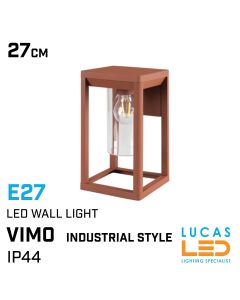 5 pcs ONLY - Outdoor LED Wall Light - E27 - IP44 - VIMO Brown/cooper - CLEARANCESpecial Price €30.75 €25.00 Regular Price €73.80 €60.00
FAQ: Professional Guide to Outdoor LED Use
Can I use a regular LED bulb in an outdoor light fixture?
You can only use a regular LED light bulb if it is specifically rated for outdoor use or wet locations. Check the IP rating to ensure it has complete protection against rain and moisture.
Do LED bulbs work better in cold temperatures?
Yes, LEDs actually thrive in low temperatures. Unlike fluorescent lights, which take time to warm up, outdoor LED lights provide full brightness immediately, even in extreme temperatures.
What is the best IP rating for garden path lights?
For path lights or those near paving slabs, an IP rating of at least IP65 is recommended. This ensures the garden lighting is water resistant and protected against different weather conditions.
Are outdoor LED lights more expensive to run?
Quite the opposite. Outdoor LED bulbs are incredibly energy efficient, leading to significant energy savings. They use much less electricity than traditional bulbs, lowering your overall energy bills.
Should I hire an electrician for outdoor lighting setup?
For mains powered systems or complex landscape lighting, hiring a qualified electrician is highly recommended. They ensure that lighting fixtures are safely connected and meet all safety and protection standards.
About the Author