


 +353 24 904 96


How to light stairs?

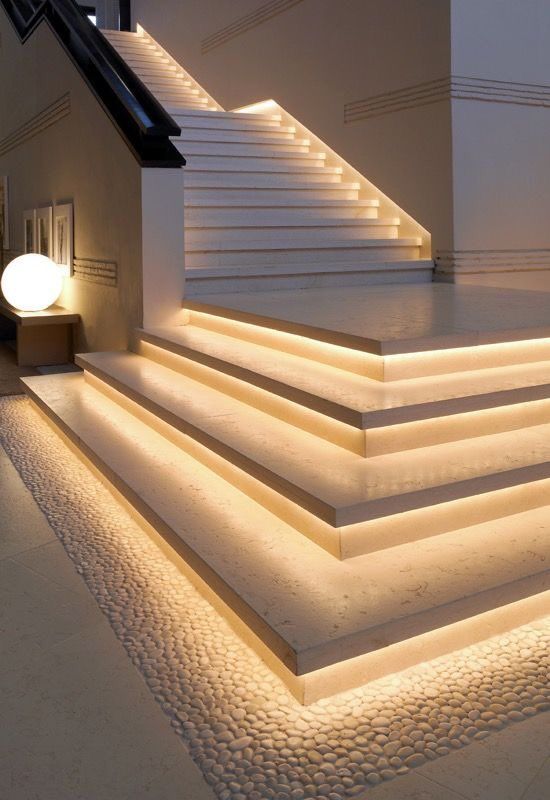
Stair lighting has a dual function. First of all, that highlights the architecture of your home. Led lights make it easy to move up and down, providing a sense of comfort, especially when wall mounted lighting or switches are located in intuitive places. The second thing is the decorative aspect - when the modern stairscase have a characteristic appearance, and they are part of a spacious day area — in that case, they simply need to look good. With the right staircase lighting you can create a welcoming and cosy atmosphere!
Table of Contents
Stair lighting — why is this important?
Stair lighting is crucial because it eliminates the trip hazard in areas with limited natural light, while simultaneously acting as a key feature that enhances the home's aesthetics. Good visibility on every flight of stairs is a safety requirement that prevents dangerous situations in dark or non-illuminated areas.We cannot overlook the fact that good visibility of stairs guarantees safety. It is easy to find yourself in a very dangerous situation in areas swallowed by darkness. Many staircases are located in the center of the house or in a hallway with limited access to natural light. In such cases Stair lighting is thus a must! If you don't feel comfortable about walking up at night it's a clear sign that you need an extra layer of light there. Proper lighting doesn't just brighten the path; it provides a warm glow that makes the stairwell feel integrated with the rest of the living space.

Staircase lighting ideas – What are the most popular options?
The most popular ideas include a mix of recessed wall lights for safety and pendant lights or chandeliers to create a real wow factor in high stairwells. Choosing between different types of fixtures allows you to match the style of your modern staircase or a more contemporary hallway design.
Here is a detailed list of the most functional and stylish design ideas:
-
Spotlights on stairs
The first proposition is using spotlights in staircases, especially in order to illuminate a staircase leading to the second floor. The spotlights should be properly positioned — it should be around 50-70 cm distance between two spotlights. The key thing is to illuminate each step of the staircase well.
However, be careful not to overdo with the amount of light — it cannot blind household members and their guests. It's worth mentioning that spotlights will work perfectly not only inside, but also outside the house due to their insulation. They are resistant to frost and extreme temperatures.

-
Hanging lamps
Sometimes the simplest solutions are the best. Hanging lamps are especially functional in a high, spacious interior. It can be, for example, a chandelier. Remember, however, that one hanging lamp will probably not be enough to illuminate every single stair, which is why you will need some more light. Adding subtle accent lighting seems to be a solution worth considering.
-
Ceiling tiles (ceiling panels)
A versatile and compact design that can be installed on the ceiling or the wall. They provide a broad, even glow and work well in a square shaped hallway, fitting both modern stainless steel designs and old-fashioned attics

-
Sconces
The most obvious choice for the side lighting is a scone. Depending on the style of your interior design, you may choose a classical model with a lampshade, but you are also free to pick a more modern solution, like a lamp with crystals or glass. If you arrange it carefully, you will be able to light up every part of your staircase without having to mount extra stair lights.
Don't forget that if you're an owner of an open staircase where the light naturally filters from the ground floor to the floor above, it's possible to create a night light effect by mounting sconces at ground-floor level.
-
LED strip lights
LEDs are highly popular now. Lots of people use this kind of lighting to light up their stairs. There are many kinds of LEDs, and it may be difficult to choose just one. Side-mounted LED miniature light fixtures and staircases make the perfect match.
Another great option is using LED strip lights which are able to illuminate each stair and are quite easy to install. A power cord is responsible for powering LED luminaries. The light source is not visible at all to the naked eye. If we want to add strips to finished stairs, we can use ones that are available in the surface mounting version. LED strip lights are the most flexible lights in the line-up because they can easily be cut. If the light is too bright, we can use an LED dimmer to reduce the light output.
LED strip lighting is always a good idea — strips have different numbers of LEDs per metre, different colours, different colour temperatures (warm white, neutral white and cool white), and different voltages. Additionally, they are easily adjustable to fit any staircase.

How to light up stairs using LED strip lights technology and smart controls?
Using LED strip lights combined with a motion sensor and smart controls allows for an automated, energy-efficient system that provides light only when someone is using the stairs. This smart approach not only saves power but also creates a futuristic ambience where the glow follows your steps.
LED strip lighting is always a good idea because of its versatility. Strips come in various colour temperatures (from warm white light to cool white) and voltages. When you install led strips in a surface mounting version, the light source remains hidden, but the skimming effect on the stairwell is breathtaking. Integrating smart controls allows you to set the brightness level to a minimum at night, serving as a gentle night light that guides you without blinding. This contemporary approach to stairway design is what gives many homes a real wow factor.
Technical performance and energy metrics for stairwells
To achieve high energy efficiency, stair lighting should provide approximately 100-150 lumens per step, utilizing LED technology to keep power consumption below 10-15W for the entire flight. When planning how to light stairs, the power supply must be calculated based on the total wattage of all led strips or recessed wall lights. For instance, a 5-meter led strip with 60 LEDs per meter usually consumes about 4.8W to 9.6W per meter. By using low level wall recessed stair lights, you can achieve significant savings—LEDs are up to 80% more efficient than traditional halogen bulbs. Furthermore, the use of a motion sensor ensures that the staircase lighting is active only for extended periods of actual use, further reducing the energy bill while maintaining maximum visibility and safety.
Summary
In conclusion, how to light stairs effectively depends on balancing functionality with aesthetics. Whether you choose beautiful chandeliers, practical ceiling panels, or flexible led strip lights, the goal is to enhance the architecture of your house while ensuring safety. By adding smart controls and indirect lighting, you can create a feeling of luxury and comfort. You are the one who decides which possibilities best suit your modern staircase!
- Sale
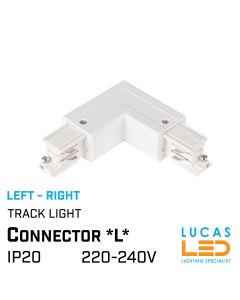 CONNECTOR - L - LEFT & RIGHT - for Rail - LED Track Lighting system - 3-phase - 3 circuit - LR - WhiteSpecial Price €12.55 €10.20 Regular Price €14.76 €12.00
- Sale
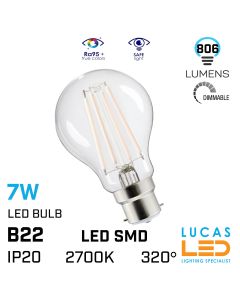 B22 LED Dimmable Bulb Light 7W - 2700K Soft Warm White - 806lm - LED FilamentSpecial Price €5.17 €4.20 Regular Price €6.46 €5.25
FAQ
What is the 27 rule for stairs?
The "27 rule" in stairway design often refers to the ideal measurement for the sum of the riser and tread (R+T), but in lighting, it is a reminder that the light should ideally be installed at a height or angle that prevents shadows longer than 2/7 of the tread depth to avoid a trip hazard.
What are the common staircase lighting mistakes?
The most common mistakes include insufficient brightness, causing dark spots, and placing stair lights at an angle that creates a blinding glare. Another mistake is ignoring the landing area, which needs additional light for a safe transition.
How to lighten up a staircase?
To lighten up a staircase, combine natural light from windows with layered artificial lighting. Use warm white light from sconces on the wall and led strips on the stair tread to achieve a bright and inviting ambience.
How can I light my stairs without electricity?
While permanent visibility usually requires a power supply, you can use battery-operated led lights with a motion sensor or solar powered exterior spotlights if the stairs are outdoors.
Is LED lighting a good choice for stairwells?
Yes, LED lighting is the best choice due to its high energy efficiency, long lifespan, and compact design. It allows for indirect lighting effects that are impossible to achieve with traditional bulbs.
How to add a LED strip to stairs?
To add a LED strip, measure the width of each stair tread, cut the strips at the designated points, and attach them to the underside using their adhesive backing. Connect them to a power supply hidden in the wall or under the staircase.
About the Author